

Department of Orthopaedic Surgery
Robotic-Assisted Knee Replacement
Learn about Total Knee Arthroplasty (TKA), robotic-assisted surgical technology, orthopaedic facilities and outpatient services at Jhansi Orthopaedic Hospital & Research Centre.
View OPD TimingsUnderstanding Total Knee Replacement and Robotic Assistance
Total knee replacement, also called total knee arthroplasty, is a procedure in which damaged surfaces of the knee joint are replaced with artificial components. Whether surgery is appropriate depends on an individual clinical assessment.
Robotic-assisted systems can provide information to support the surgeon in planning and assessing component positioning and joint alignment during a knee replacement procedure. The surgeon remains responsible for clinical decisions and the operation.

Robotic-Assisted Knee Replacement:
Technology Overview
Intraoperative 3D Mapping
Provides anatomical information to support surgical planning and assessment during the procedure.

Joint Alignment Assessment
Helps surgeons evaluate knee alignment and artificial component positioning during the procedure.

Standard Surgical Protocols
Supports the surgeon in following the planned surgical approach using the available robotic-assisted system.
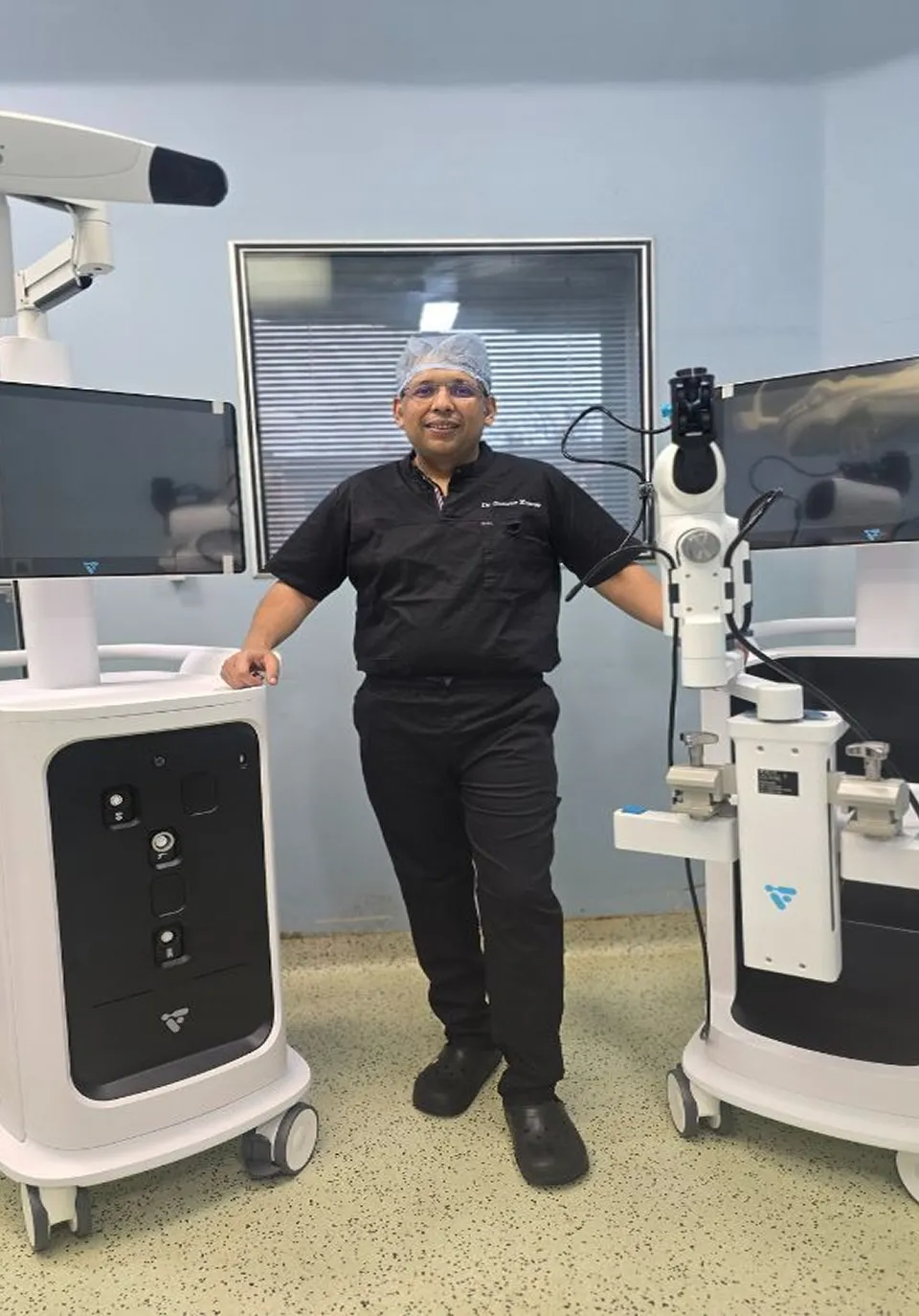
Dr. Gaurav Gupta
Senior Consultant – Orthopaedic Surgery
MS (Orthopedics)
UP Medical Council Registration No. 4848869
Academic & Professional Profile: Dr. Gaurav Gupta serves as Senior Consultant in the Department of Orthopedic Surgery at JOH. His clinical focus includes primary and revision joint arthroplasty, complex trauma care, and robotic-assisted alignment mechanics. He regularly engages in academic lectures, medical faculty training, and Continuing Medical Education (CME) initiatives regarding joint health.
Jhansi Orthopaedic Hospital Infrastructure
Orthopaedic Operating Theatres: Dedicated operating theatre facilities with laminar airflow systems and specialised surgical instrumentation.
Post-Operative Rehabilitation Unit: Facilities supporting supervised mobility, physiotherapy and rehabilitation exercises.
Diagnostic & Imaging Services: Imaging facilities supporting orthopaedic assessment and treatment planning.
State-of-the-Art-Technology
OPD Schedule & Operating Hours:
Check out ourState-of-the-Art-Technology
OPD Timings
10:00 AM–2:00 PM
5:00 PM–7:00 PM
Please confirm the schedule before travelling.
OPD Location
Opposite SBI, Bundelkhand University Branch, Kaimasan Nagar, Kanpur Road, Jhansi, Uttar Pradesh 284128.
General enquiries
+91 95555 05906
Email Enquiries
info@joh.co.in
Frequently Asked Questions About Robotic Knee Replacement
Robotic-assisted knee replacement is a form of Total Knee Arthroplasty (TKA) that uses computer-assisted technology to support surgical planning and assessment of knee alignment. The surgeon evaluates the patient's condition, makes clinical decisions and performs the procedure.
Robotic-assisted knee replacement uses digital planning and anatomical information to help the surgeon assess the knee joint, plan bone preparation and evaluate artificial component positioning. The robotic system assists the surgeon during the procedure but does not independently perform the surgery.
Conventional knee replacement uses established surgical instruments and techniques to prepare the joint and position artificial components. Robotic-assisted knee replacement incorporates additional technology to support surgical planning and intraoperative assessment. The appropriate approach depends on the patient's condition and the surgeon's clinical assessment.
Individuals with advanced knee joint damage, including damage associated with osteoarthritis, may be evaluated for knee replacement. Suitability for robotic assistance depends on factors such as joint condition, medical history, imaging findings and the treating surgeon's assessment.
No, not everyone with knee pain requires knee replacement surgery. Treatment depends on the underlying cause and severity of the condition. Depending on the clinical assessment, management may include medication, physiotherapy, exercise, lifestyle modifications or surgical treatment.
Robotic-assisted knee replacement, like other surgical procedures, carries potential risks and complications. These may include infection, blood clots, bleeding, stiffness, pain and anaesthesia-related complications. The treating surgeon can explain the potential risks based on the individual's medical condition.
Recovery time varies between individuals and depends on general health, joint condition, surgical findings and rehabilitation progress. Physiotherapy and supervised mobility exercises may form part of the recovery process. The treating team provides guidance based on individual progress.
Rehabilitation after total knee replacement may include supervised walking, knee mobility exercises, muscle strengthening and gait training. The rehabilitation programme is planned according to the patient's condition and recovery progress.
Medical Information and Disclaimer
This page is intended for general health education and institutional information. The content provided does not constitute medical advice, diagnosis or treatment recommendations.
The suitability of total knee replacement or robotic-assisted knee surgery can only be determined following an individual clinical assessment by a qualified registered medical practitioner.
All surgical procedures carry potential risks and complications. Treatment decisions, rehabilitation requirements and outcomes may vary depending on individual medical conditions. No specific surgical outcome or recovery period is guaranteed.
For medical emergencies, please visit the hospital casualty department or contact local emergency services.